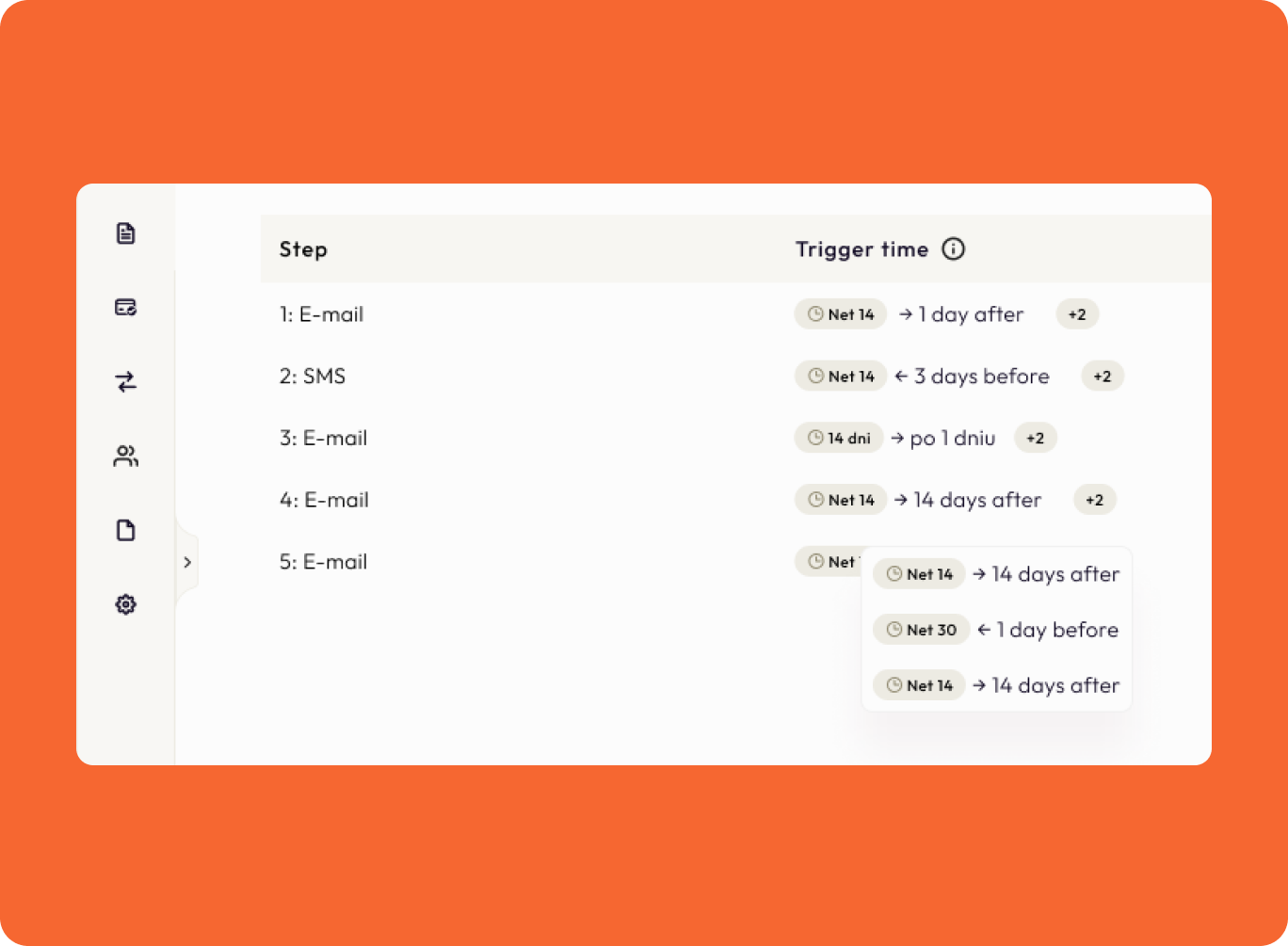
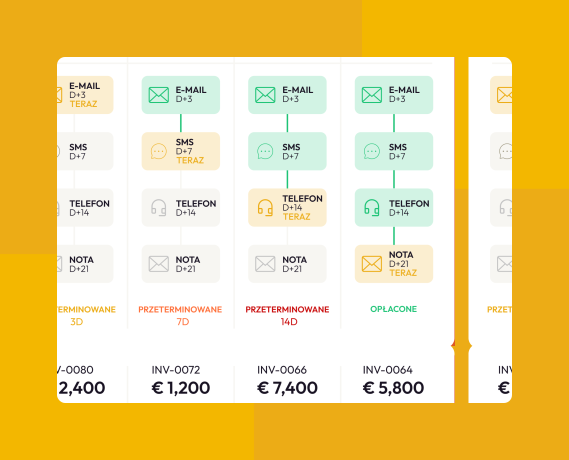
Sunbay collects data from invoices, payments and the reminders it has sent.
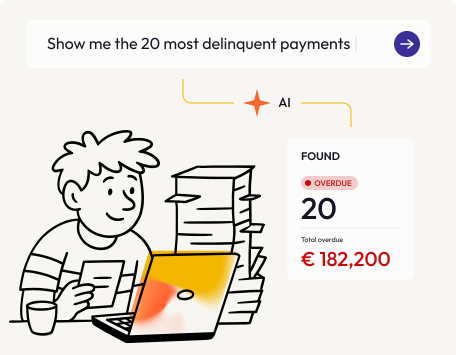
You see aging, statuses and late payment risk straight away, and you can ask the AI agent for details.







.svg)




.png)
.svg)

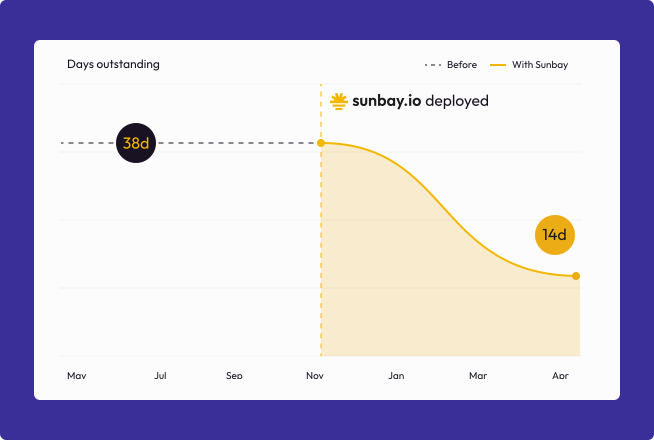
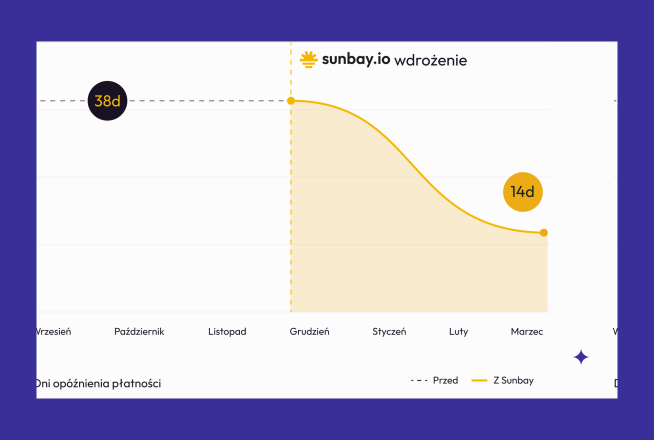
I 100% recommend Sunbay. We no longer have invoices sitting 90+ days overdue, and our payment time dropped from 26 to 14 days, all while the business kept scaling.

Polecam Sunbay w stu procentach. Nie mamy już faktur przeterminowanych o ponad 90 dni, a czas płatności spadł z 26 do 14 dni, choć firma cały czas rośnie.
DSO, aging, reporting and the AI agent in practice.
DSO, or days sales outstanding, is the average number of days between issuing an invoice and receiving the money. You calculate it by dividing receivables by credit sales for a period and multiplying the result by the number of days in that period. Sunbay calculates DSO continuously from the invoice and payment data in your ERP.
An aging report groups receivables by how long they have been overdue, for example up to 30, up to 60 and over 90 days, broken down by customer. In Sunbay the report is always current, so you can see at once which customers need attention.
Anything about your receivables, in plain language. For example, "how much is more than 60 days overdue?" or "which customers are paying later and later?". You get back a list of invoices or a summary, and the agent is included in the Standard and Pro plans.
From your ERP or accounting system and your CRM, plus the history of every message Sunbay has sent. Data syncs continuously, so reports show today's position rather than the day of the last export. You can also start with a CSV file.
You no longer have to piece it together from several files. Outstanding balance, aging, DSO and cases awaiting a decision sit in one view, and the AI agent builds any breakdown on request, such as all invoices more than 30 days overdue by salesperson.
Most teams track DSO, receivables aging, the share of overdue invoices and the average number of days late. It also pays to check how well each step performs, for example which reminder most often leads to payment. Sunbay collects all of this automatically.
.svg)