Picture a typical Monday in your customer’s accounts payable department. The invoices waiting to be paid add up to more than the money in the account, so someone has to decide who gets paid this week and who waits until next week. The order is rarely decided by the amount or by how long you have worked together. More often it depends on who reminded them about their invoice most recently.
A supplier who sent an invoice and went quiet ends up at the back of the line. The customer may value them just as much, but nobody is asking for the money.
Silence has a cost
It is easy to assume that if the work is done, the customer will pay. Krzysiek Romaniak, the founder of Flowmore and co-founder of Energetyczny Projekt, kept pushing calls to customers to the following week for years, and at one point he had about PLN 200,000 in unpaid invoices. He tells the story in our post on what unpaid invoices taught him.
Every week without a reminder gives the customer time to pay someone else first. And if their business is in trouble, it can go under before anyone gets in touch.
Being heard doesn’t mean being aggressive
Following up on an invoice is often confused with pestering the customer. Aggressive collection is a call after two months of silence, then a tense email and a letter from a law firm. It comes too late, it is emotional, and customers rightly dislike it.
Regular contact looks different. It starts with a polite message before the due date, followed by a reminder on the day and further ones after a few days and after a week. Every message is calm and to the point. The customer sees it as a sign that this supplier keeps track of its invoices and won’t be forgotten.
A rhythm that doesn’t depend on memory
Manual reminders fail because they depend on memory and a free moment, and more urgent work always wins. That is why companies that handle payments well set a fixed schedule and stick to it without exceptions. We describe a sample rhythm in our post on why you should stop calling it debt collection, and you will find ready-made wording in our payment reminder email templates.
Customers quickly learn that someone keeps track of every invoice you send. Your invoice stops being the one that can be moved to next month.
What automation changes
A system doesn’t go on vacation and doesn’t forget a reminder on a Friday afternoon. It sends messages in the tone you set, without apologies and without frustration. Your team has more time to talk to customers about the work itself.
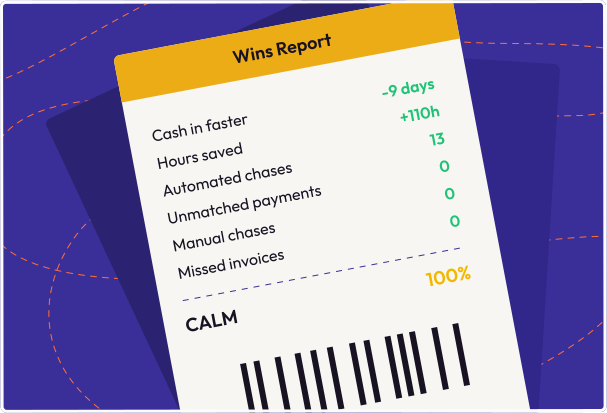
At Flowmore, Krzysiek’s agency, Sunbay now runs the reminders and escalations. Late payments are down 85%, and customers pay 27 days sooner on average. Read the full Flowmore story.
.svg)